AI Fashion Campaigns Without Models: What's Actually Possible
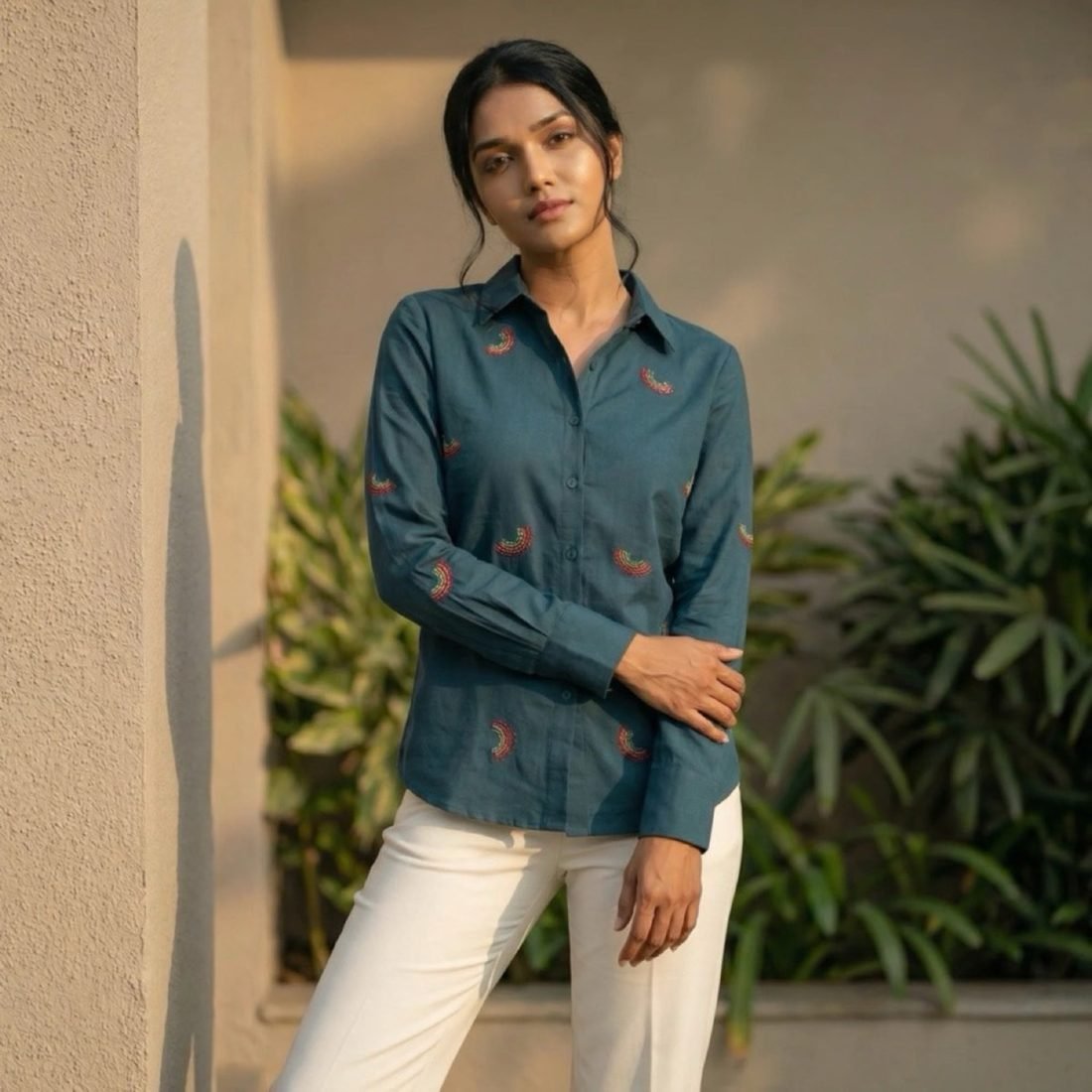
In short
- Generated on-model imagery removes casting, fittings, hair, makeup and licensing renewals.
- Garment accuracy depends entirely on the quality of the reference photography.
- Hands, complex closures and fine detail remain the hardest elements and need explicit checking.
- Diverse casting becomes trivially cheap, which is a genuine creative gain rather than a cost saving.
On-model campaign imagery was, until recently, gated by budget. A ten-piece independent label could not justify casting, fittings, hair, makeup, a stylist and a photographer — so it shot flat lays and competed at a disadvantage against brands that could. That gate has moved.
What works well now
- Editorial campaign frames. Full styling, location mood, cinematic light. The format that used to cost the most is now the most accessible.
- Seasonal variation. The same collection in summer daylight, monsoon greys and festive warmth, without three shoot days.
- Diverse casting. Different ages, body types and skin tones across a campaign, at no incremental cost. This is a real creative gain, not just a saving — most Indian labels under-represent their own customer base simply because each additional model was another day rate.
- Location work. A rooftop in Jaipur, a monsoon street, a marble interior — without permits, travel or weather risk.
What still needs care
- Hands. Still the most frequent failure. Every frame needs checking specifically for finger count and plausible articulation.
- Closures and hardware. Zips, buckles, hooks and clasps drift from the real item unless directed tightly and verified against the reference.
- Text on garments. Printed slogans and logos are unreliable and usually need to be composited from the real photograph.
- Fine repeating detail. Intricate embroidery, zari work and dense prints need the reference to be very sharp, or the pattern degrades into approximation.
Where accuracy comes from
Everything traces back to the reference photography. A generated on-model image is only as faithful as the flat photograph it was built from. This is why we insist on sharp, evenly lit reference frames of the actual garment before starting — and why we would rather delay a day for a better reference than deliver a fast set with the drape subtly wrong.
Brands that treat the reference shoot as a formality get approximate results. Brands that photograph each garment carefully once get a campaign asset library they can regenerate against indefinitely.
The honest limitation
If your product's selling point is a texture or construction detail that must be seen exactly — hand embroidery where the stitch itself is the value — photograph it. Generated imagery is excellent at mood, scene and fit. It is not a substitute for documenting craft where the craft is the entire proposition.
We will say so if that is your situation. It is a small share of enquiries, but it is a real one.
Getting the garment reference right
Everything downstream depends on this, so it is worth doing carefully:
- Photograph flat and steamed on a plain surface, shot straight down to avoid perspective distortion.
- Capture the full print repeat if the fabric is patterned, so scale can be held accurately.
- Shoot the hardware separately — buttons, zips, buckles — in macro.
- Include a colour reference, even just a white sheet, so the fabric colour can be matched rather than guessed.
- Note the fabric weight and behaviour. "Heavy raw silk, holds its shape" and "light rayon, clings" produce very different drape, and this is one thing a photograph does not fully convey.
Casting decisions you now get to make freely
When each additional model was a day rate, most Indian labels shot one model and hoped their customers saw themselves in her. That constraint is gone, and the interesting consequence is creative rather than financial.
You can now show the same collection across a genuine range of ages, body types and skin tones — which for most Indian brands means finally representing the actual customer base rather than a narrow aspirational proxy. Brands that have done this consistently report it as the change customers comment on most.
Building a campaign, not a pile of images
The risk with cheap production is volume without coherence. A campaign needs:
- One defined look — palette, light quality and mood held across every frame
- A hero image that carries the whole idea alone
- Supporting frames that vary composition without varying the look
- Detail frames that ground the fiction in real product
- Format coverage — the same look cropped for feed, Reels and site
Ten coherent images beat forty unrelated ones. The temptation when production is cheap is to generate everything; the discipline is to select ruthlessly afterwards.
Where this is heading
The practical trajectory is that campaign-grade imagery stops being a budget question and becomes a taste question. That is good for small labels with a clear point of view and uncomfortable for large ones that were relying on production budget as a moat.
Frequently asked
Can AI show my actual clothing on a model?
Yes, provided the garment is photographed accurately first. The reference determines how faithful drape, seams, print placement and proportion are. A flat, sharp photograph of the real garment is the foundation of the whole result.
Do I need to disclose that models are AI-generated?
Advertising rules are evolving and vary by market. Our recommendation is straightforward: do not imply a generated person is a real endorser or customer. Using generated models to display a garment is presentation; presenting one as a testimonial is a claim.
What does AI still get wrong in fashion imagery?
Hands remain the most common failure, along with complex closures, layered fine detail, and text on garments. These are checkable — every frame we deliver is reviewed specifically for them before it leaves.
Want Visuals Like This for Your Brand?
Send us 1 photo of your product on WhatsApp and see a campaign-grade editorial sample transformed for free within 24 hours.
Book a Free Sample